Meet Mary Mangani: “The Soil Doctor”
Leading Farmers Toward Climate-Resilient Soil Fertility


Across Machinga District in southern Malawi, smallholder farmers are navigating longer and more frequent dry spells that make rain-fed agriculture increasingly uncertain. In response, many are returning to conservation agriculture practices that rebuild soil health and strengthen resilience. Through hands-on field support and farmer-to-farmer learning, the Agricultural Resilience through Climate Services (ARCS) Consortium Project is accelerating this transition.
One of the most inspiring champions of climate resilience is Mary Mangani, a Lead Farmer from Muhaniwa village. At 47 years old and a mother of five, Mary is affectionately known in her community as the “soil doctor” — and for good reason.
Mary trains a cohort of 15 follower farmers in low-cost, locally adapted soil-improvement techniques. Her sessions include the preparation of “Mbeya” manure, pit composting, moisture-retention mulching, correct ridge spacing, and essential soil and water conservation methods.
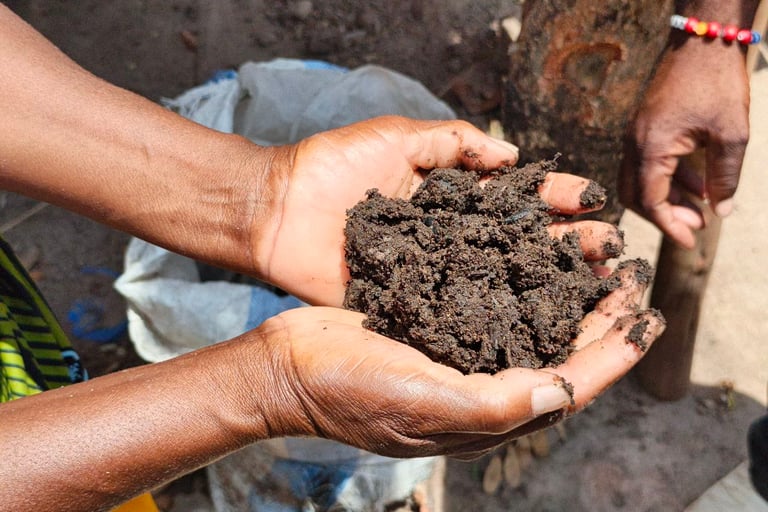
A sample of Mbeya manure—a locally blended organic mix helping farmers improve soil health and withstand dry spells. © Mikaïla Issa, NORCAP
Her 0.5-acre demonstration plot is a hands-on learning space, showing farmers what climate-smart practices can achieve — richer soils, stronger moisture retention, and far less dependence on expensive chemical fertilizers. One of the most inspiring champions of climate resilience is Mary Mangani, a Lead Farmer from Muhaniwa village.
Mary highlights why these practices matter:
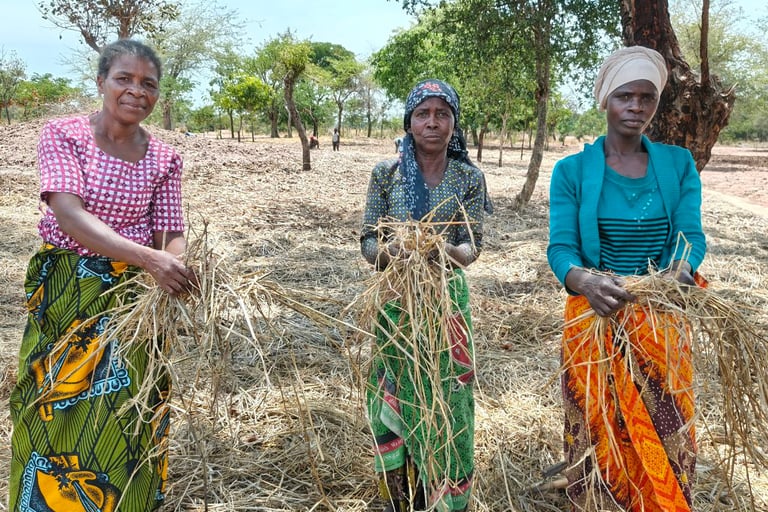
Mary Mangani demonstrates crop cover on her plot, a key practice for retaining moisture and improving yields under erratic rainfall. © Mikaïla Issa (NORCAP)
“These technologies are essential for building resilience in smallholder farmers when faced with climate change.”
Among those Mary mentors is Patuma Makwiata, who shared how the “Mbeya” manure technique has reshaped her approach to farming. Patuma’s fields are often hit by dry spells, making production difficult. But the locally blended hybrid compost — a mix of animal droppings, ash, soil, water, and a small amount of chemical fertilizer — is offering her renewed hope and confidence. As Patuma reflected:
“I’ve practised conservation agriculture for 12 years, but only now — with proper training— am I seeing real results.”
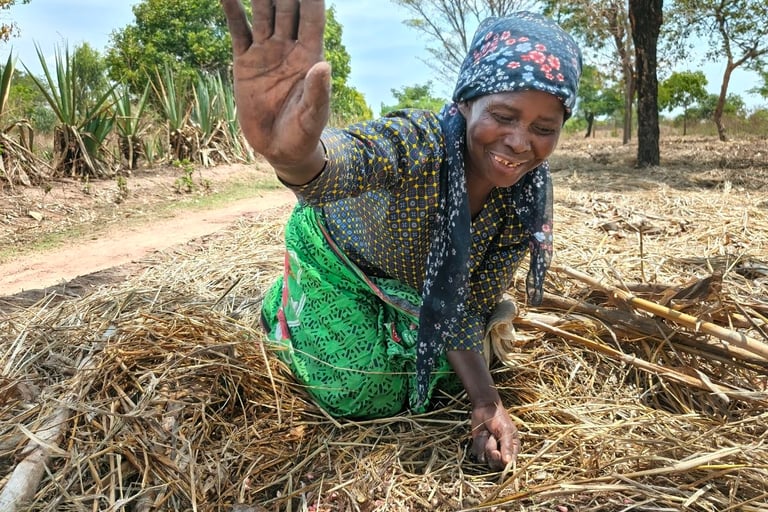
Patuma Makwiata, one of Mary’s trainee farmers, is applying Mbeya manure and CSA techniques that are boosting her confidence this season. © Mikaïla Issa (NORCAP)
With strengthened skills and clearer guidance, she now approaches the farming season better prepared to manage her land and make informed decisions amid increasing climate variability.
From the implementing partner’s perspective, Abel Manda, Project Officer at Total LandCare, emphasized the significance of these farmer-led improvements:
“We are very satisfied with how farmers are adopting best practices that their lead farmers teach them in their respective districts.”
Mary’s leadership shows how community-driven knowledge exchange can lead to meaningful and lasting change. With support from ARCS Consortium Project and the commitment of partners such as the Centre for Environmental Policy & Advocacy (CEPA) and Total LandCare (TLC), climate-smart agriculture practices are spreading across more villages — strengthening long-term resilience pathways for smallholder farmers in Malawi.
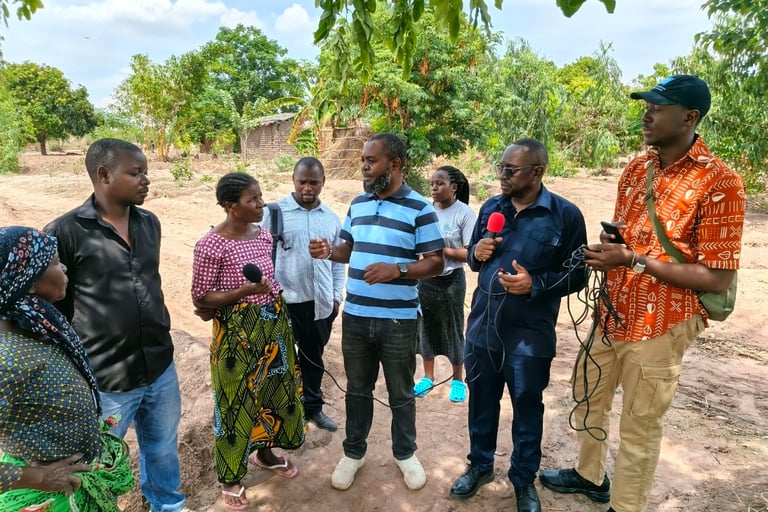
Lead Farmer Mary Mangani guiding farmers through soil and water conservation techniques as part of ARCS Consortium Project-supported farmer-to-farmer learning sessions in Machinga District. © NORCAP